Child Development in Early Years: Building the Foundation for a Successful Life
Child development in the early years plays a crucial role in shaping a child’s future. The first five years of a child’s life are considered the most important phase for physical, emotional, social, and cognitive growth. During this stage, children absorb information quickly, develop essential skills, and build the foundation for lifelong learning. Understanding the importance of child development in the early years helps parents and educators provide the right environment for holistic growth.
One of the key aspects of child development in early years is cognitive development. This includes a child’s ability to think, explore, and solve problems. Activities such as storytelling, puzzles, and interactive play help stimulate brain development and improve memory and concentration. A well-structured play school environment encourages curiosity and enhances learning through fun and engaging methods.
Another important area is social and emotional development. Children learn how to express their feelings, interact with others, and build relationships. Play schools play a vital role in this by creating opportunities for group activities, sharing, and teamwork. This helps children develop confidence, empathy, and communication skills, which are essential for their future success.
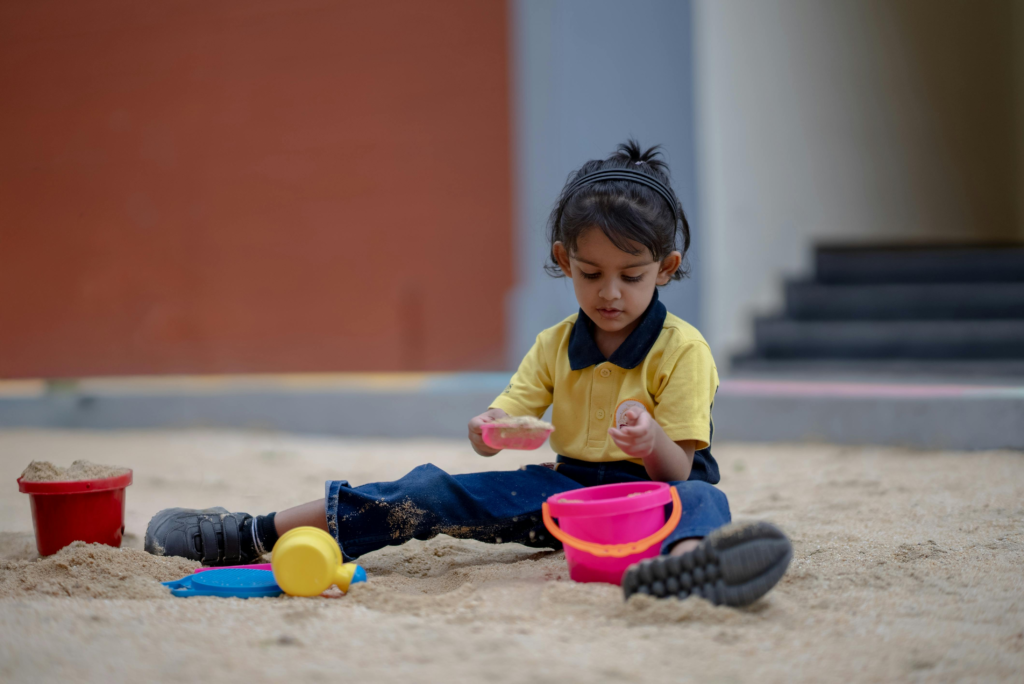
Physical Child development in early Years
It is equally important in early childhood. It includes both fine motor skills, like holding a pencil, and gross motor skills, such as running and jumping. Activities like drawing, outdoor play, and hands-on tasks help strengthen muscles and improve coordination. A balanced routine that includes both indoor and outdoor activities supports overall physical growth.
In the early years, physical development is generally divided into two key areas: gross motor skills and fine motor skills. Gross motor skills involve large muscle movements such as crawling, walking, running, and jumping. These skills help children gain strength, balance, and coordination. Activities like playing outdoors, climbing, and dancing significantly contribute to improving these abilities.
On the other hand, fine motor skills involve smaller muscle movements, especially in the hands and fingers. These include actions like holding a pencil, buttoning clothes, drawing, and picking up small objects. Developing fine motor skills is essential for everyday tasks and prepares children for academic activities such as writing and drawing.
Physical child development in early years also supports brain development and overall well-being. When children engage in physical activities, it enhances their concentration, improves their energy levels, and boosts their confidence. Active play also helps in developing social skills as children learn to interact, share, and cooperate with others.

Language development
is another critical component of child development in the early years. Children begin to understand and use language through listening and speaking. Encouraging conversations, reading books, and singing rhymes can significantly improve vocabulary and communication skills. Early exposure to language helps children express themselves clearly and confidently.
A quality play school like Rainbow Play School provides a nurturing environment where all aspects of development are addressed. With trained teachers, structured activities, and a safe atmosphere, children receive the support they need to grow and thrive. Early childhood education not only prepares children for formal schooling but also builds a strong emotional and intellectual base.
In conclusion, it is essential for shaping a child’s personality, abilities, and future success. By focusing on cognitive, social, emotional, physical, and language development, parents and educators can ensure that children grow into confident and capable individuals. Investing in early development today creates a brighter and more successful tomorrow for every child.
Conclusion: Child Development in Early Years
In conclusion, child development in the early years plays a vital role in shaping a child’s future growth and success. This stage is not only about physical growth but also includes cognitive, emotional, and social development, all of which are interconnected. The experiences and learning opportunities provided during these formative years create a strong foundation for lifelong learning and well-being.
By focusing on proper nutrition, a safe environment, and engaging activities, parents and educators can effectively support holistic development. Encouraging play, communication, and exploration helps children build confidence, creativity, and essential life skills.
Ultimately, investing time and care in child development in the early years ensures that children grow into healthy, capable, and confident individuals, ready to face future challenges and opportunities.