Cognitive Activities for Young Children’s Development
Early childhood is a critical period for brain development. During these years, children rapidly build cognitive abilities such as thinking, reasoning, memory, and problem-solving. One of the most effective ways to support this growth is through Cognitive Activities that are fun, engaging, and age-appropriate.
Children learn best when they are actively involved in the learning process. Instead of traditional teaching methods, interactive and playful experiences help children understand concepts more easily. Cognitive Activities not only enhance mental abilities but also improve focus, creativity, and decision-making skills.
In play schools like Rainbow Play School, incorporating well-designed activities into daily routines can significantly boost a child’s overall development. This blog explores the importance, types, and benefits of Cognitive Activities for young children, along with practical ideas for parents and educators.
What Are Cognitive Activities?
Cognitive Activities are tasks and exercises that help improve a child’s mental processes. These activities focus on developing skills such as:
-
- Thinking
-
- Memory
-
- Attention
-
- Problem-solving
-
- Language development
They are designed to stimulate the brain and encourage children to explore, question, and learn through experience.
Importance of Cognitive Activities in Early Childhood
1. Supports Brain Development
The early years are when the brain develops most rapidly. Engaging children in Cognitive Activities strengthens neural connections and enhances learning capacity.
2. Improves Problem-Solving Skills
Children learn how to analyze situations and find solutions through activities like puzzles and games.
3. Enhances Memory and Concentration
Activities that require focus help children improve their attention span and memory retention.
4. Builds Confidence
Successfully completing tasks gives children a sense of achievement, boosting their confidence and motivation.

Key Benefits of Cognitive Activities
1. Enhances Thinking Skills
One of the main benefits of Cognitive Activities is improved thinking ability. Children learn to:
-
- Recognize patterns
-
- Understand relationships
-
- Make decisions
2. Improves Language Development
Activities like storytelling and conversations help children learn new words and improve communication skills.
3. Encourages Curiosity
Children naturally ask questions. Cognitive Activities encourage them to explore and discover new things.
4. Develops Logical Reasoning
Games that involve sorting, matching, and sequencing help children develop logical thinking.
5. Strengthens Attention Span
Regular engagement in structured activities improves focus and concentration.
Best Cognitive Development Activities for Young Children
1. Puzzle Games
Puzzles are excellent Cognitive Activities that help children:
-
- Improve problem-solving skills
-
- Enhance memory
-
- Develop patience
2. Building Blocks
Playing with blocks helps children understand shapes, sizes, and balance while improving creativity.
3. Memory Games
Simple memory games like matching cards help improve recall and concentration.
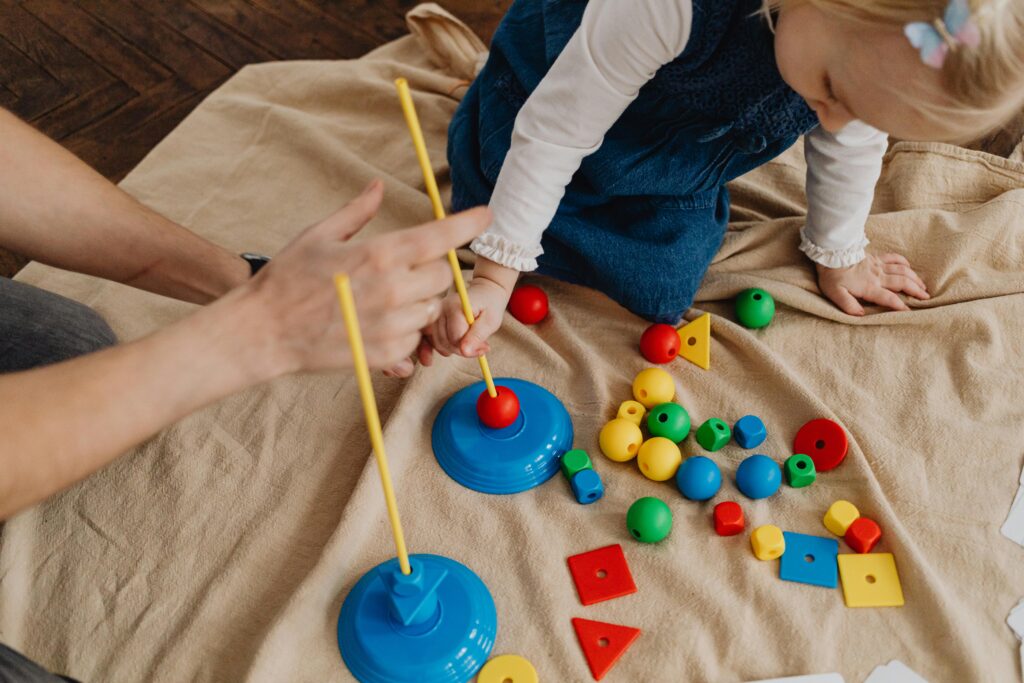
4. Sorting and Matching Activities
Sorting objects by color, shape, or size helps children develop classification skills.
5. Storytelling and Reading
Reading stories improves imagination, vocabulary, and listening skills.
6. Role-Playing Games
Pretend play helps children understand real-life situations and improves thinking skills.
7. Art and Craft Activities
Drawing, painting, and crafting encourage creativity and problem-solving.
8. Music and Rhymes
Songs and rhymes improve memory, language, and listening skills.
9. Outdoor Exploration
Nature walks and outdoor play stimulate curiosity and observation skills.
10. Simple Math Activities
Counting objects and basic number games introduce early math concepts.
Age-Wise Cognitive Activities
Toddlers (1–3 Years)
-
- Stacking toys
-
- Simple puzzles
-
- Naming objects
Preschoolers (3–5 Years)
-
- Matching games
-
- Storytelling
-
- Role-playing
Kindergarten (5–6 Years)
-
- Problem-solving games
-
- Basic math activities
-
- Creative projects